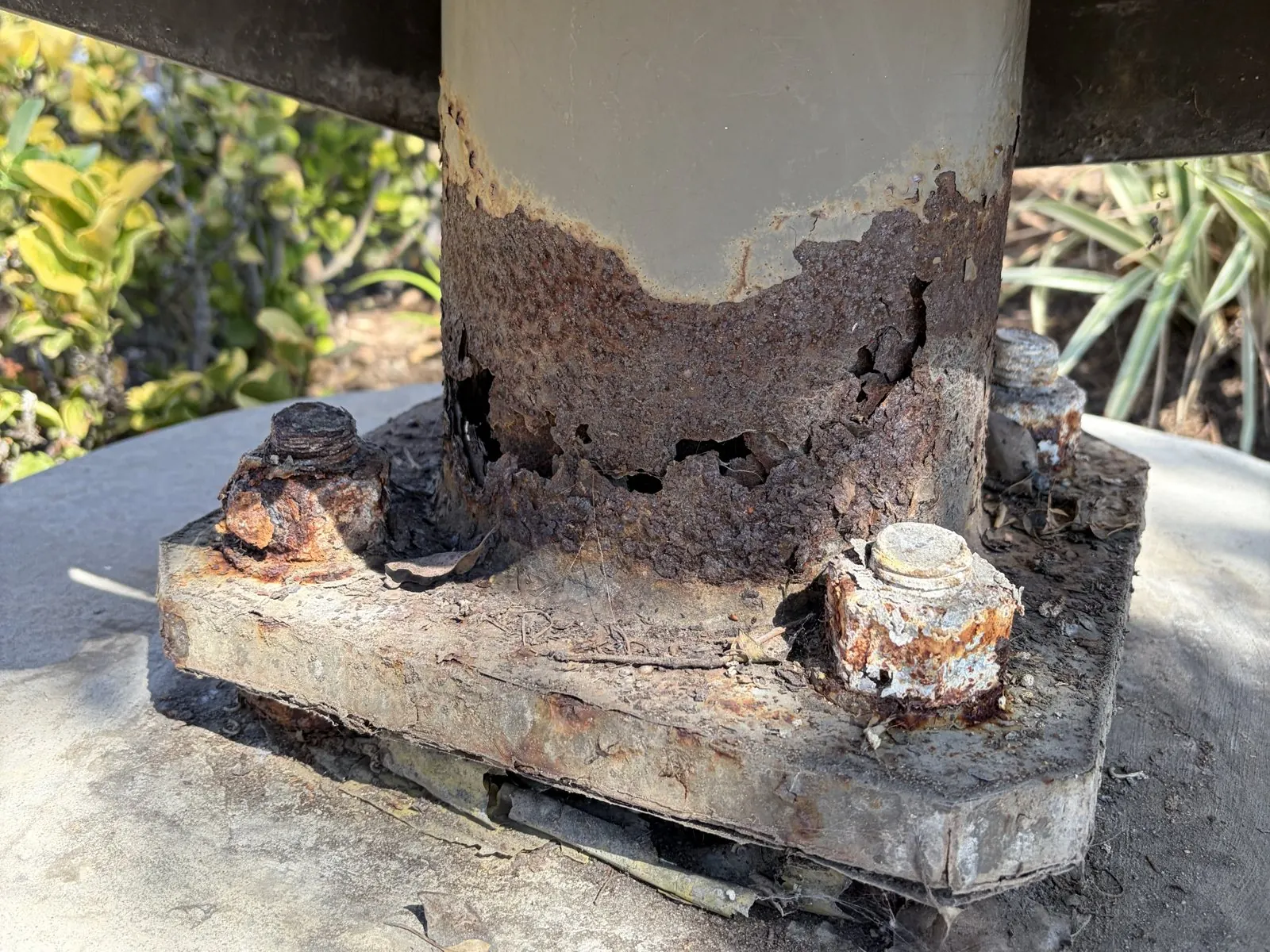
A light pole can look perfectly healthy from across a parking lot and still be close to failing. The damage usually starts at the bottom, where the pole meets its base plate, and it works from the inside out.
Why the base goes first
Water, sprinkler overspray, landscaping and debris collect around the bottom of a pole. Over time that moisture corrodes the steel, often inside the pole where nobody can see it. Paint on the outside can hide the problem until the metal has thinned enough to crack, or the pole leans or falls.
Why a visual check isn't enough
Looking at a pole tells you about its paint. It doesn't tell you how much solid metal is left in the wall. Two poles can look identical from the outside while one has lost a large share of its thickness.
How ultrasonic inspections work
- Scan: our technicians send high-frequency sound waves through the pole wall at the base.
- Analyze: the returning signal shows wall thickness, voids and cracks, so each pole gets a condition rating.
- Report: you get written results for every pole, with clear repair or replace recommendations.
There's no drilling and no damage, and the lights stay on the whole time, so lots and streets stay open.
What you get out of it
- Fewer surprises: weak poles are found before they fall.
- Smarter spending: you replace only the poles that need it.
- A paper trail: documented inspections show you took reasonable steps to keep the property safe.